
This Blog section is for news about Rainbow & Brown products and their application but especially new products.
30 Apr
Withholding Period for Herbicides
Although this information is available on our labels, we frequently receive inquiries about withholding periods. To address this, we have prepared a summary of the ACVM approved withholding periods for our product range.
| PRODUCT | WITHOLDING PERIOD – STOCK AND/OR PLANT BACK |
| WHACK – 2,4-D 800 | Poisonous plants such as ragwort and others may become more palatable after spraying and livestock should be kept out until plants have died off. For animal safety reasons do not graze treated pasture for 2 weeks after application. This will also allow WHACK – 2,4-D 800 to penetrate through the plant for maximum efficacy. |
| BUCKSHOT | Except for animal safety reasons, in line with good agricultural practice, a withholding period of 1 day is required. |
| DECISION | Do not graze crops or treated pasture for 14 days after treatment. |
| DICAMBA 500 SL | Do not graze treated areas or feed treated crops or threshings to livestock for two weeks after application. |
| GA200 | 28 days on all crops. |
| RAINBOW & BROWN GLYPHOSATE 360 | In line with good agricultural practice, a withholding period of 1 day is required. |
| RAINBOW & BROWN GLYPHOSATE 540 | A withholding period of 1 day after application is required as good agricultural practice. It is recommended that grazing or cultivating is delayed for 1 day after treatment of annual weeds or 3 days if perennial weeds are present to ensure absorption of Rainbow & Brown Glyphosate 540 Herbicide. |
| GRANNY GLYPHOSATE | In line with good agricultural practice, a withholding period of 1 day is required. |
| GRASSMATE | Other than for animal safety or re-establishment of clovers, a withholding period of 1 day after application is required as good agricultural practice. |
| HALOX 100EC | SOIL RESIDUES: Do not plant cereal, maize, or grass crops within 12 weeks of treatment. |
| RAINBOW & BROWN MCPA 750 | Except for animal safety reasons, a withholding period of 1 day after the application is required as good agricultural practice. |
| MSF600 | Keep dairy cows out of treated areas for at least three days after spraying. Keep other stock out for one day. |
| RANGER | Do not graze treated areas for 7 days after application. |
| TRICLO | Other than for animal safety or re-establishment of clovers, a withholding period of 1 day after application is required as good agricultural practice. |
|
ANIMAL SAFETY: Poisonous plants such as ragwort may become more palatable after spraying. If concerned that stock health may be affected, the stock should be kept away from treated areas until plants have died down. Delay grazing for two weeks after spraying as treated weeds will be palatable to stock. |
|
20 Sep
0
13405
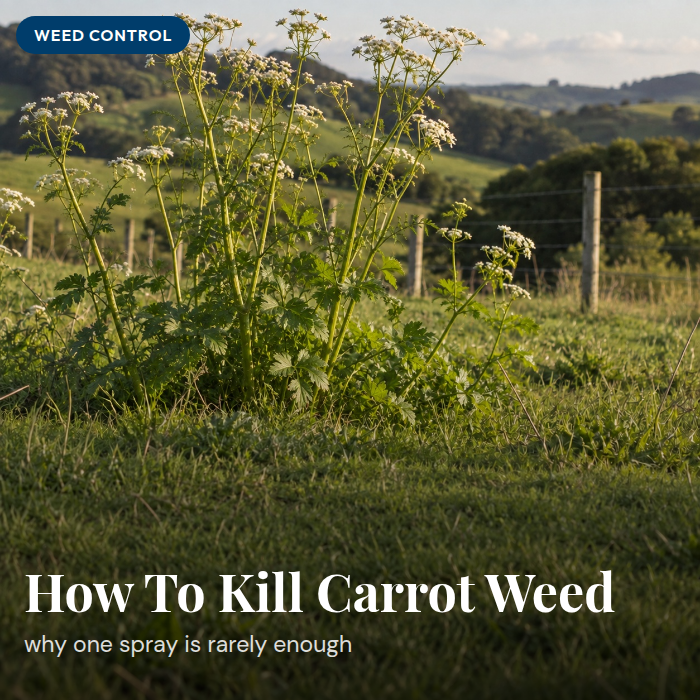
Carrot weed is the common name for parsley dropwort (Oenanthe pimpinelloides), a perennial broadleaf weed that regrows each year from small black tubers on its roots. Stock won't eat it, so it takes over paddocks quietly and then flowers from October through April once it's too late to do much about it. The window that actually works is autumn th..
13 Sep
0
74
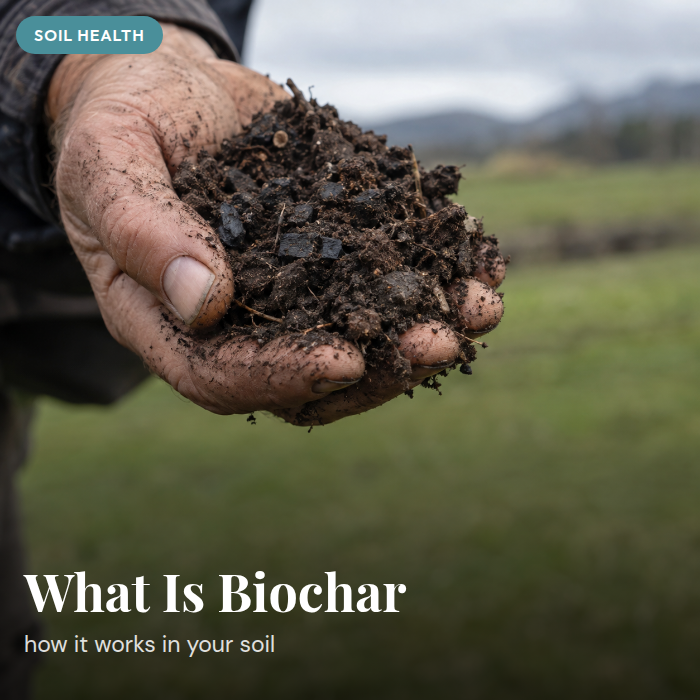
Biochar is a highly porous form of charcoal made by heating wood with very little oxygen, and it works by giving soil (and gut) microbes somewhere to live while holding onto water and nutrients that would otherwise wash straight through. Southland Carbon makes it from New Zealand wood biomass at Pukerau, and the same process that produces the bioc..
17 Aug

0
239
Buttercup survives in pasture because cattle find it genuinely unpalatable, so it's left standing while everything around it gets grazed down. Flumetsulam-based herbicides such as Decision control both annual and giant (perennial) buttercup while leaving clover largely untouched, unlike older broadleaf sprays that knock clover around too. Spring, ..
Leave a Comment