
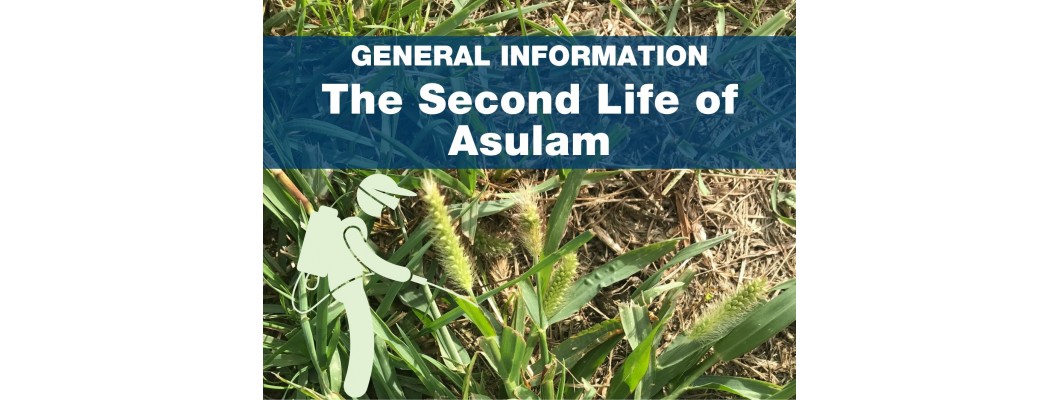
Asulam meets YBG
It sounds like another episode in the Harry Potter series but no, it is definitely herbicide-related.
Asulam was introduced around 1965 by a company called May & Baker. Some of us oldies will no doubt remember them. It’s a carbamate-based herbicide with a mode of action being a DHP inhibitor. Its primary target weeds are docks and bracken. This was the main product to control docks, but outlived its useful life when several other alternate products were developed, including our Ranger product.
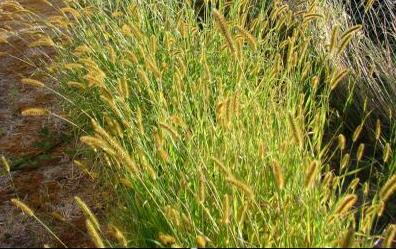
All very interesting, I hear you saying, but is there a point to this story? There is. The asulam-based products came to life again when there was much anecdotal evidence that products with asulam as an active ingredient proved effective against Yellow Bristle Grass (YBG) in pasture. We have received many reports of this over the last few years and many previously used the recommended fenoxaprop-p-ethyl-based products such as Puma S1 but only achieved moderate success, so people started off -label use of the asulam-based herbicides.
Nufarm developed Dockstar2 and is the only label that can legally make claims for the effectiveness of asulam against YBG. The manufacturer has protection for 5 years from their registration. Fair enough, they spent the money on the field tests, so they should have some label protection but it proved that Asulam does work.
Probably the most commonly known products containing asulam as the active ingredient besides Dockstar2 are Asulox3, Asulan DC4 and Asucane5 (see our product page for Asucane5).
This is the herbicide equivalent of the COVID buzzword ‘pivot’. Basically, asulam which was near the end of its useful life has ‘pivoted’ and is now widely being used to help control the increasingly problematic Yellow Bristle Grass.
1 Registered tradename of Bayer Intellectual Property GMBH-Germany.
2 Registered tradename of Nufarm Australia Ltd.
3Registered tradename of UPL Limited.
4Tradename of Adria New Zealand Ltd
5Registered Tradename of AGPRO (N.Z.) LIMITED
Leave a Comment