
Unlocking the Secrets of Soil: A Beginner’s Guide to the Art of Soil Conditioning
Generally, improving soil depends on the Cation Exchange Capacity (CEC) of the soil that you are working with. Exchange capacity is merely a measure of the capacity of the soil to exchange nutrients.
Whether the CEC is large or small, it affects the soil’s capacity to hold nutrients such as calcium, magnesium, potassium, and ammonia nitrogen. A lighter soil like sandy soil will have a CEC of around 5 and will hold less of everything. It doesn’t take as much fertiliser to get the right nutrient balance for total saturation, but the nutrient load can be easily stripped by cropping so it’s something you have to watch after each growing period. Another soil may have a CEC of 10 which means it can hold twice as many nutrients as sandy soil and doesn’t lose as many nutrients during cropping. So, understanding the type of soil you have is very important when trying to make improvements.
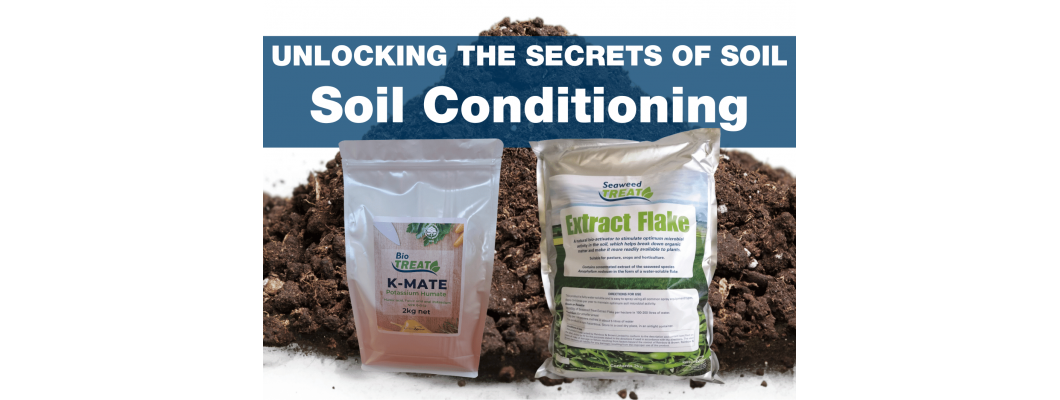
We have a product called K-Mate which is potassium humate that acts as a soil conditioner. Our potassium humate contains 50% humic acid, 15% fulvic acid and 10% potassium. Humic acid and Fulvic acid are crucial in dissolving minerals and trace elements to make them more available to the plant for uptake. The addition of fulvic acid acts as a superhighway for nutrients to plant cells. As the soil quality improves the need for fertiliser decreases. Humate-rich soil acts as a carbon sink to help keep CO2 in the ground instead of escaping into the atmosphere. Humates have been around for thousands of years and are known to increase yields, reduce nitrate leaching and basically increase fertiliser effectiveness.
Seaweed is another soil conditioner. Seaweed has more than 70 minerals, vitamins and enzymes that feed the microbes in the soil. Plant roots, including pasture roots, secrete exudates that the microbes feed off (into the rhizosphere). The microbes in turn release enzymes that help the roots take up water and nutrients. This process to frost and disease, increases the uptake of inorganic constituents from the soil and promotes vigorous growth of the plant or pasture.
Seaweed fertilisers are especially useful in organic farming. They contain almost every micro-nutrient in a fully chelated (immediately available) form. Seaweed contains alginates which act as very good soil conditioners. The alginates react with metals in the soil and form long, cross-linked polymers in the soil. These polymers improve the crumbling in the soil and swell up when they get wet. They also help the soil to hold or contain moisture for a long time.
Give us a call or send us an email if you want to discuss this further. It’s a big subject and we have found a lot of farmers want to know more. We suspect the major fertiliser suppliers aren’t so interested in getting this type of information out there as it potentially costs them fertiliser sales!


Leave a Comment