
This Blog section is for news about Rainbow & Brown products and their application but especially new products.
28 Nov

Control of Invasive Lawn Weed
Q.
Hello Paul & the folks at R & B. Are you able to inform me as to the name of this invasive grass weed that is attempting to take over our lawn?
It struggles to survive the winter when young, but goes for it in this hot weather. Any suggestions for control?
Enjoy your newsletter.
A.
The weed in your lawn is a paspalum species (there are quite a few varieties and I’m not sure which one yours is, but for control purposed the differences are immaterial).
The problem with a grass-type invader like paspalum is that any spray that kills is will also kill most of the common lawn grass varieties. Glyphosate does work at high rates but it’s only practical applied direct with a weed wand or as a very carefully applied spot spray … and even then you’ll get some temporary dead spots in your lawn. It’s unavoidable, alas.
Below is a link to the Massey University fact sheet about paspalum, which confirms the gloomy advice I have given you that glyphosate is the only realistic chemical option once the problem has got beyond the hand-grubbing stage, and you will have to suffer some collateral damage if you use it.
Regards, and thanks for the nice note about the newsletter.
Paul
26 Oct


0
464
Every NZ farm that uses hazardous substances needs an up-to-date chemical inventory and a current safety data sheet (SDS) for each product, kept where workers and emergency services can get to them. When WorkSafe checked 680 sheep, beef and dairy farms in late 2025, missing SDSs and inventories were behind 94% of the improvement notices issued. B..
08 Oct

0
2128
A wetter helps spray droplets spread across a leaf and stay there, instead of beading up and rolling off before the herbicide gets in. Use a non-ionic wetter for everyday spraying, and step up to an organosilicone wetter for waxy, hairy, dusty or stressed weeds. Always check the herbicide label first, because it tells you whether a wetter is need..
30 Sep
0
3404
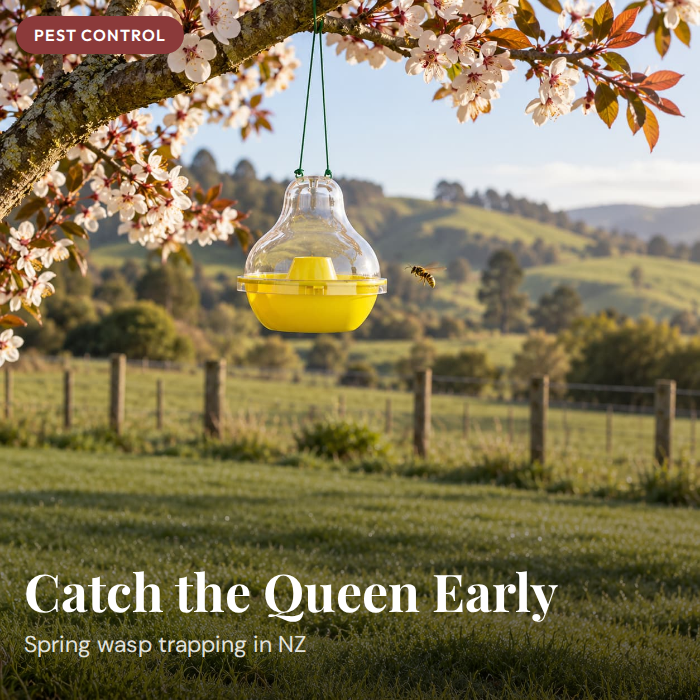
Spring is the only time of year a wasp queen is on her own. She's out of hibernation, building a small nest by herself and feeding her first larvae with no workers to back her up. Catch her now and that nest never forms, which means no colony of thousands and no new queens next autumn.
✓Queens are active from early spring, roughly September to..
Leave a Comment