
This Blog section is for news about Rainbow & Brown products and their application but especially new products.
02 Feb
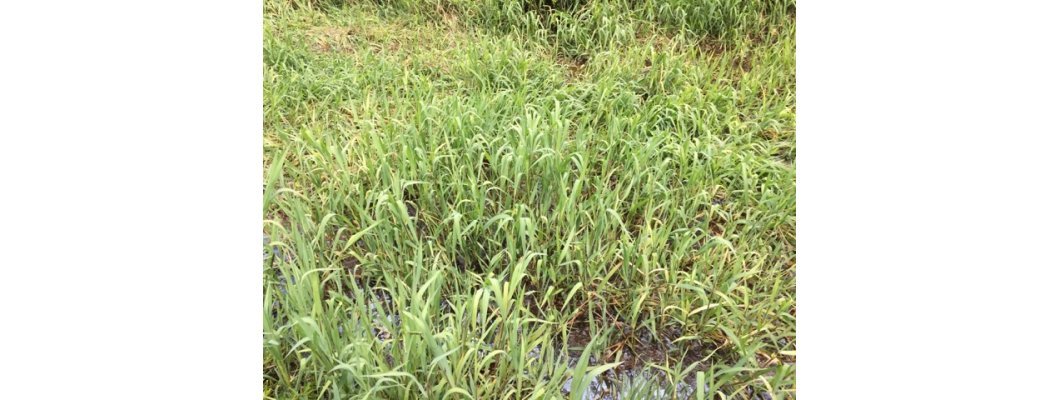
Q. We have a problem weed, I don’t know what it is called, in one of our ponds, and have been trying to get rid of it, but to no avail, it just keeps coming back, just wondering if you would have any suggestion about a suitable spray to use to eliminate it all together.
I have attached a photo of the weed in the pond, and one of it close up, hoping you can help.
A. It’s a type of paspalum called Mercer Grass (Paspalum distichum). This is a paspalum variety that often infests crops, but it’s also able to handle very wet conditions including growing in pond water up to about a foot deep.
Usually high rates of glyphosate (6L/Ha) will kill Mercer grass, but in an aquatic setting it’s even harder to kill, and you need at least 9L/Ha of Glyphosate360, or 4kg of Granny. But you’re very likely looking for a hand spraying rate, rather than a per-hectare rate. So in a normal 15L knapsack sprayer you’d need at least 300ml of Glyphosate360, or 150g of Granny. That’s double the usual glyphosate hand spraying rate. And I think you might get a better result without any added penetrant, in this case (paspalum in standing water).
None of the common selective weed sprays used for pasture weeds will be effective, because this is a grass and so won’t be affected by things like GrassMate, 2,4-D and MCPA, etc.
There is only one chemical that selectively kills paspalum, and it’s a very dangerous stuff called MSMA. It can only be handled by a certified Approved Handler (and even then, only one specifically trained and certified for that specific chemical), and it cannot be applied over water. And it’s a deadly poison. So let’s forget that!
If you want to spray the pond I’m afraid that it’s going to have to be glyphosate, sprayed at abnormally high rates. Spraying in summer will mean that you will not be harming any other waterway via runoff, and with glyphosate the residues are very short-lived.
26 Oct


0
464
Every NZ farm that uses hazardous substances needs an up-to-date chemical inventory and a current safety data sheet (SDS) for each product, kept where workers and emergency services can get to them. When WorkSafe checked 680 sheep, beef and dairy farms in late 2025, missing SDSs and inventories were behind 94% of the improvement notices issued. B..
08 Oct
0
2128
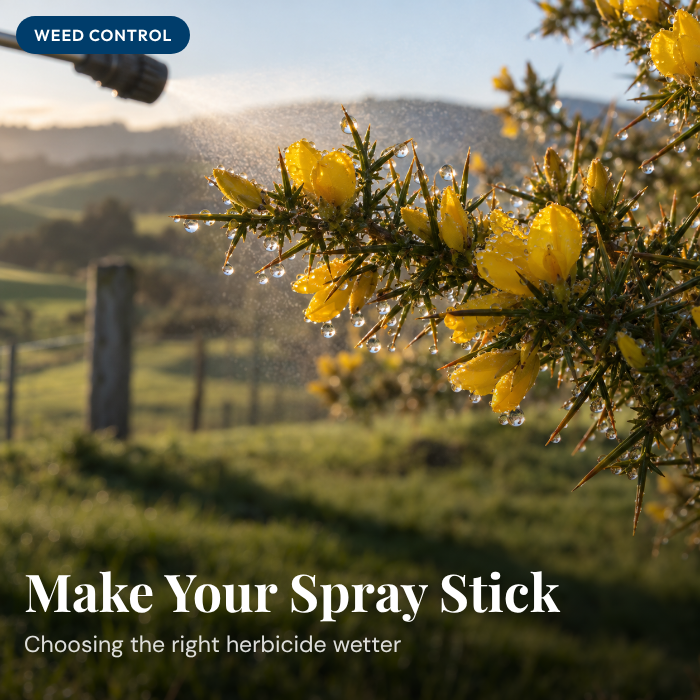
A wetter helps spray droplets spread across a leaf and stay there, instead of beading up and rolling off before the herbicide gets in. Use a non-ionic wetter for everyday spraying, and step up to an organosilicone wetter for waxy, hairy, dusty or stressed weeds. Always check the herbicide label first, because it tells you whether a wetter is need..
30 Sep
0
3404
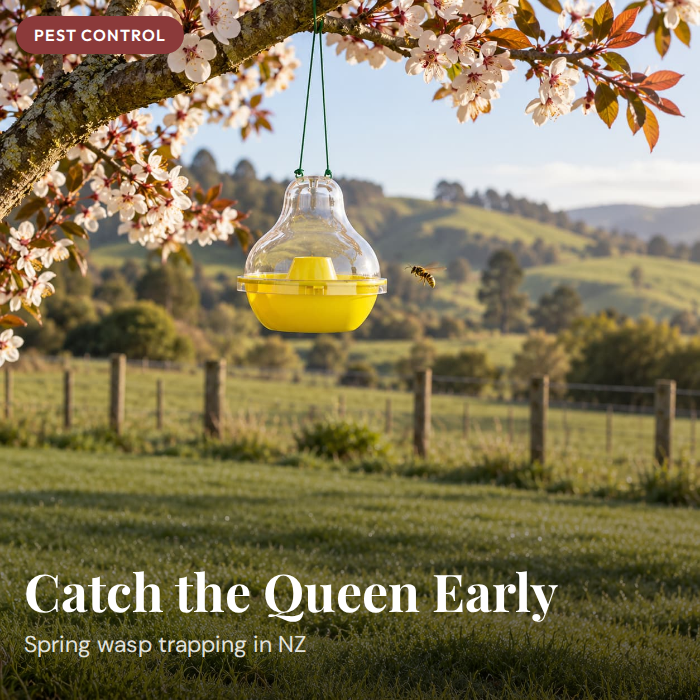
Spring is the only time of year a wasp queen is on her own. She's out of hibernation, building a small nest by herself and feeding her first larvae with no workers to back her up. Catch her now and that nest never forms, which means no colony of thousands and no new queens next autumn.
✓Queens are active from early spring, roughly September to..
Leave a Comment