
This Blog section is for news about Rainbow & Brown products and their application but especially new products.
General information about farming, weed control, herbicides, seaweed, fertlisers and other.
05 Sep
0
3287
Exploring the Potential of Plant Based Amino Acids
We have been conducting research and trial work on using plant based amino acids on pasture which we would like to share with our readers. The initial results have been very interesting and quite exciting.
While traditional amino acids are sourced from fish, our plant based amino acids are derive..
04 Aug
0
3740
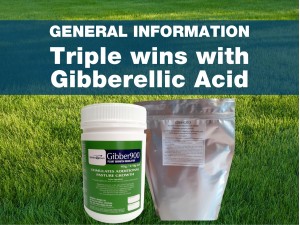
BOOSTING GROWTH, SAVING COSTS, SUPPORTING SUSTAINABILITY WITH GIBBERELLIC ACID (GA3)
We have been supplying gibberellic acid for over 15 years so we have spoken to many people who have asked us if gibberellic acid really works.
Gibberellic acid (our Gibb-Gro or Gibber 900) is a plant hormone that was discovered in 1953 and was mainly used on plan..
31 Jul
0
4269
Asulam meets YBG
It sounds like another episode in the Harry Potter series but no, it is definitely herbicide-related.
Asulam was introduced around 1965 by a company called May & Baker. Some of us oldies will no doubt remember them. It’s a carbamate-based herbicide with a mode of action being a DHP inhibitor. Its primary target weeds are docks an..
30 Jul
0
3548
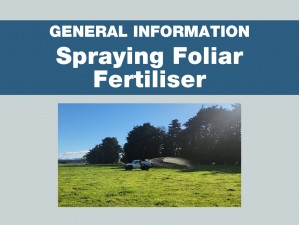
A Day out Spraying Foliar Fertiliser
Article written by Shayne McNamara
A colleague recently spent some time with Rik Morris from RM Spraying learning about how some of the Rainbow & Brown foliar fertiliser products are used in the field.
RM Spraying is based out of Gore and applies foliar fertilisers to mostly dairy and sheep/beef farms in the ..
30 Apr
0
52767
Withholding Period for Herbicides
Although this information is available on our labels, we frequently receive inquiries about withholding periods. To address this, we have prepared a summary of the ACVM approved withholding periods for our product range.
PRODUCT
WITHOLDING PERIOD – STOCK AND/OR PLANT BACK
WHACK – 2,4-D 800
..
21 Feb
0
10720
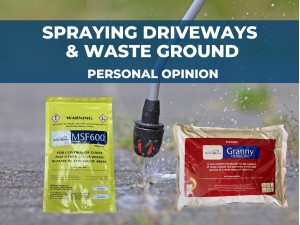
My personal opinion...
When I was spraying my driveway at home I got fed up with respraying, and although being a manufacturer where I get herbicides very cheaply, I decided to go and buy a competitor product called TAG G2(1) that you can get from most Farm supply stores.
I gave up on this as although TAG G2(1) is a very good product containing..
12 Feb
0
5119
The ABC of Ragwort Control
Ragwort is not a weed that lets you get away with a spur-of-the moment approach.
There are two reasons for that. First is that this normally biennial plant has the ability to morph into a very hard-to-kill multi-crown perennial if it’s been mowed, slashed or ineffectually sprayed. And each mature plant can produce 2..
17 Jan
0
3795
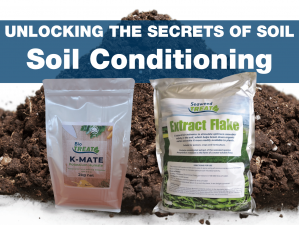
Unlocking the Secrets of Soil: A Beginner’s Guide to the Art of Soil Conditioning
Generally, improving soil depends on the Cation Exchange Capacity (CEC) of the soil that you are working with. Exchange capacity is merely a measure of the capacity of the soil to exchange nutrients.
Whether the CEC is large or small, it affects the soil’s cap..
12 Sep
0
11009
Does Water Quality Affect Herbicides?
A simple question and a resounding yes. For instance, most of you know that some herbicides, glyphosate being one of them, lose activity in the soil but that also applies to soil particles in the water. So if you are dragging water from a pond, even if you are filtering you need to be careful that the filter..
26 May
0
13048
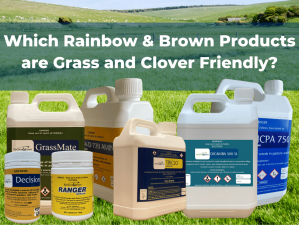
Which Rainbow & Brown Herbicides are Grass and Clover Friendly?
Below is a handy reference table to show which of our products are safe to use on pasture and / or clover and which have some residual effect which might affect replanting.
Note: in some circumstances and at certain times of the year or at the rates required to control some weeds the..
25 May
0
9147
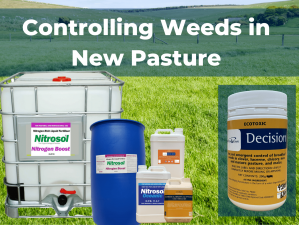
Controlling Weeds in New Pasture
This one can be tricky as many of the herbicides used for general weed control in established pasture are just too tough on new pasture and you risk damaging your new pasture.
Whether grass weeds or broadleaf weeds they can be either annual or perennial. It is really important that you are on top of perennial weed..
10 Jan
0
38804
How long should it take stuff to die, after you’ve sprayed it?
It depends on three things.
First is the species, size and maturity of the weed involved.
Fast growing species, especially annuals, will die quickly because the herbicide is transported right through their smaller and simpler structures very quickly. Older, larger, and more ma..
17 Aug

0
162
/* ── How it works steps ── */
ol.rb-steps { padding-left: 0; list-style: none; counter-reset: rb-step; }
ol.rb-steps li {
counter-increment: rb-step;
display: flex;
gap: 14px;
padding: 12px 0;
border-top: 1px solid #e8e8e8;
}
ol.rb-steps li:last-child { border-bottom: 1px solid #e8e8e8; }
ol.rb-steps li::before {
..
05 Aug

0
224
Californian thistle is hard to kill because the plant you see is only the top of a deep, spreading root system that keeps throwing up fresh shoots from root buds. Knocking back the top growth won't get on top of it. The reliable approach is a herbicide that moves through the whole plant down to the root buds, applied while the thistle is actively..
05 Aug
0
292
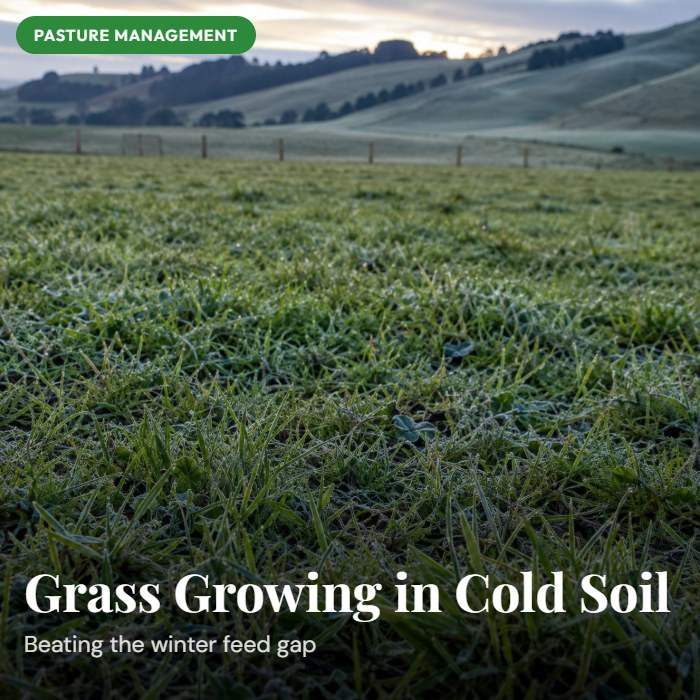
Grass growth stalls once soil temperatures drop below about 10 degrees, which is the winter feed gap every farmer knows. Gibberellic acid, a natural plant hormone sold as Gibb-Gro and Gibber900, can get pasture moving again once soils sit in the 6 to 13 degree range, with a lift in dry matter over about three weeks. It works as a top-up on green,..