NZ-made liquid soil biology treatment – charged biochar, fish hydrolysate and molasses
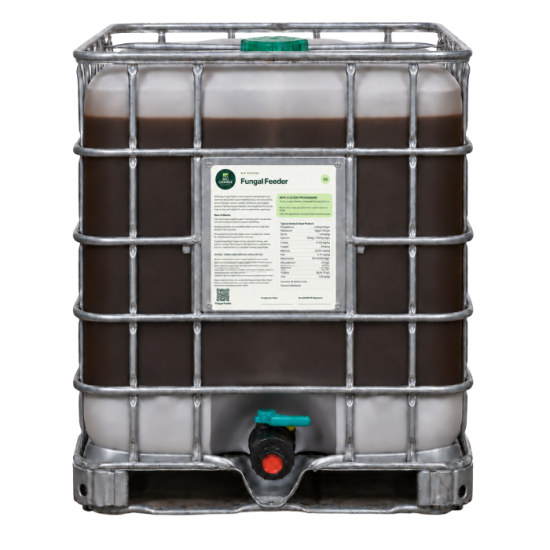
BioCharge Fungal Feeder is the foundation of the BioCharge range and the place most operations start. It's charged Southland Carbon biochar, very finely ground, plus fish hydrolysate and molasses. No seaweed, no added nutrients – just the biology and somewhere permanent for it to live.
Healthy pasture soil wants its fungi and bacteria in rough balance, somewhere near 1:1. Years of cultivation and synthetic fertiliser leave most farmed soils heavily bacteria-dominated – often a long way off. Fungal Feeder is built to feed the fungal side back up and bring the soil toward that balance.
It's deliberately low in nutrients. This isn't a fertiliser, it's a biology reset. Get the biology working and the ground starts pulling its weight: better structure, better water and nutrient holding, and more of every input reaching the plant instead of leaching away.
The idea behind it is simple: carbon is infrastructure, not food. A fish product feeds the biology for a while, then it's gone. The charged biochar gives that biology somewhere to live, hold moisture and oxygen, and keep cycling nutrients season after season – and that carbon stays in the ground for decades.
Supplied in 1,000 L IBC and 200 L drums. This is a commercial-format soil biological, not a garden bottle.
Best For / Ideal Uses
- The starting point for any operation new to the BioCharge range
- Pasture and dairy soils that are heavily bacteria-dominated and need the fungal side brought back up
- Resetting soil biology on ground worn down by years of cultivation and synthetic fertiliser
- Building soil structure, water holding and nutrient efficiency from the ground up
- Cutting nitrogen leaching and getting more out of bought-in fertiliser
- Cropping, horticulture, orchards, vines and berries wanting a stronger fungal base
- Lifestyle blocks running orchards, vines, trees or shrubs that want a stronger fungal base
How It Works
Most farmed soils are heavily bacteria-dominated. When the fungal side is starved, soil holds less water, leaks more nitrogen, and leans harder on bought-in fertiliser to do a job the biology should be doing for free. Fungal Feeder brings the balance back with three parts working together:
- Charged biochar – a porous carbon lattice with an enormous internal surface area, on the order of two million square metres. It arrives already inoculated and biologically active, and acts as a permanent home for microbes to live in, hold moisture and oxygen, and keep cycling nutrients season after season. The carbon stays put for decades.
- Fish hydrolysate – supplies the amino acids, fats and sugars that feed soil microbes and get the fungal networks moving. There's no seaweed in Fungal Feeder, on purpose, so those fungal networks can establish first before you feed the broader community.
- Molasses – a readily available carbon and sugar source that gives the microbial population an early energy boost while the fungal networks get established.
Because the biochar is delivered already charged and biologically active, it skips the nutrient tie-up you can get when raw carbon goes on and microbes have to colonise it first.
Balance depends on what you farm:
- Pasture and dairy want roughly 1:1 fungi to bacteria. Most farmed dairy soils start a long way off. That's where the biggest, fastest gains are, and where most of our customers begin.
- Cropping (kale, maize, brassicas) is a different balance again, with high nitrogen demand through the growth spurt. Smaller, more frequent applications feed the crop steadily.
- Berries, vines, orchards, trees and shrubs are naturally fungal-dominant and want the ratio tipped further that way, nearer 2:1 to 5:1 in favour of fungi.
The honest way to know where you sit is a quick fungi-to-bacteria test from Soil Food Web – a baseline before you start, and a clear picture of the shift afterwards. Ask us about getting the cost of the test rebated when you order.
Technical Details
Product type: liquid biological soil treatment (char-based soil biology)
Made in: New Zealand
Key components:
- Charged biochar, very finely ground, supplied by Southland Carbon (Pukerau, Southland)
- Fish hydrolysate
- Molasses
- No seaweed – so fungal networks can establish first
- Deliberately low in nutrients – this is a biology treatment, not a fertiliser
Application rate:
- 30 L/ha per application, three applications, 30 days apart (90 L/ha total), or
- The full 90 L/ha in a single pass for a quicker response
Water rate: mix at a minimum of 1 part BioCharge Fungal Feeder to 2 parts water
Coverage: a 1,000 L IBC covers around 11 hectares total (three applications at 90 L/ha total), or around 33 ha for a single 30 L/ha pass
Application method: apply as a soil or pasture spray using standard spray equipment suitable for biological liquids. Ground application only, no stock stand-down.
Pack sizes: 1,000 L IBC and 200 L drums.
If you need timing, compatibility or mixing guidance for your setup, give us a call and we'll talk it through.
Frequently Asked Questions
Where do I start with BioCharge?
Here. Fungal Feeder is the foundation of the range and what most operations start with, and keep coming back to. It gets the fungal side of your soil working first. Once the biology's established, you can step up to BioCharge Boost (adds a seaweed tonic) or BioCharge Max (adds soluble nutrition).
Is BioCharge Fungal Feeder a fertiliser?
No. It's deliberately low in nutrients – a biology treatment, not a fertiliser. It won't replace your fertiliser, but by getting the biology working it helps unlock nutrients already locked up in the soil, so over time you can often ease back on bought-in inputs. If you want nutrition built in, that's what BioCharge Max is for.
How do I know what balance my soil needs?
It depends what you farm. Pasture and dairy want roughly 1:1 fungi to bacteria; cropping needs more nitrogen through the growth spurt; and berries, vines, orchards and trees are naturally fungal-dominant and want the ratio tipped further toward fungi. The best way to know where you sit is a Soil Food Web fungi-to-bacteria test. Ask us about getting the cost rebated when you order.
Can I use it on a lifestyle block?
Yes, it works the same way on a smaller property as it does on a full farm. It's still supplied in 200 L drum or 1,000 L IBC though, so it suits a lifestyle block running enough ground to use one, not a home garden or a handful of pot plants.
When's the best time to apply?
Apply when soils are active and moisture is present. Autumn and spring are the common windows for biological soil work.
Do I need to keep stock off after applying?
No. There's no stock stand-down with Fungal Feeder. It's a ground application only.
Safety & Compliance
Always read and follow the label before use.
Wear appropriate protective equipment when handling and spraying biological products.
Apply according to local regulations and good practice. Ground application only, no stock stand-down.
The charged biochar in BioCharge Fungal Feeder is made by Southland Carbon in Pukerau, Southland, and the product is blended and stocked by Rainbow & Brown. Want to talk through where your soil sits and how to get started? Get in touch – we're happy to help, and the advice comes with it.
For full handling information, see the label, product spec and Safety Data Sheet attached to this listing.