
Paspalum
Paspalum dilatatum- Paspalum
Paspalum urvillei – Vasey grass
Paspalum distichum – Mercer grass
Download the PDF

DESCRIPTION
Well recognised especially in lawns, Paspalum, being a grass, is virtually impossible to get rid of without sacrificing your pasture or lawn.
Paspalum is a large, coarse looking, low growing perennial grass. It has short, stout rhizomes which join the individual plants to form dense clumps.
Paspalum is usually easy to spot in lawns as it is probably the “grass” with the broadest leaves and because it grows flat to the ground and it has tough leaf -stems it can be difficult to mow effectively. At the base of the leaf the membranous ligule will have a tuft of hairs on either side but otherwise the leaf has few hairs on it. It can, though have a slight purple tinge along the edge of the leaf.
The seed head is usually able to be identified easily compared to most other grasses as it has only 4-7 “fingers” in the seed head.
The seed heads of Paspalum can contain fungus Claviceps paspali. This fungus or ergot is known to be cause staggers in horses and cattle. Sheep seem to be less affected.

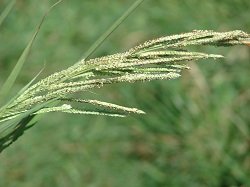

Paspalum - Paspalum dilatatum Vasey grass - Paspalum urvillei Mercer grass - Paspalum distichum
HABITAT
Traditionally found in lawns and nearby flower gardens. Being a large grass it also survives and thrives in waste areas.
It is also found in pasture and it is subject to debate as to whether this should be considered a pasture weed as it does provide summer feed, especially in the dry summers but because it competes with perennial ryegrass over the summer by the time you get into winter there is less quality ryegrass available for winter feed.
Paspalum needs warm conditions to thrive and as a result it is less active over winter and is generally only a problem in the North Island although the creep South is now more apparent.
Vasey grass (Paspalum urvillei) is very tall growing and usually only found on roadside so control is less of a problem there. Mercer grass (Paspalum distichum) is generally found only in swampy areas.
MANUAL CONTROL
Manually digging out Paspalum is only partly effective. The rhizomes are brittle and difficult to dig out without breaking and so regrowth of some Paspalum is likely to occur.
HERBICIDES TO CONTROL PASPALUM
There used to be a reasonably effective selective herbicide available commercially for lawn-care professionals but this product, which was arsenic based, is no longer available in New Zealand even for commercial use.
Being a grass it is extremely difficult to control without killing or damaging other grass species, especially fine fescue grasses.
In pasture if you decide to remove Paspalum you will either need to spray out your whole pasture in and then re-sow with ryegrass and clover in early autumn or spot spray late summer and a few weeks later rake out the dead material and rhizomes and re-sow, again in autumn. The same applies to lawns although most people would spot spray the lawns, rake and re-sow. Herbicides to spray out pasture include;
In orchards the preferred method is likely to be GA200 as this is very orchard friendly in that it will only kill the plants or parts of plants that it is sprayed directly on. GA200 will also kill most grasses and clover but is resistant to some ryegrass species. Use GA200 glufosinate ammonium at 7.5-10L per hectare.
Weed Wiping Herbicides to Kill Paspalum
Glyphosate is the most commonly used herbicide for controlling paspalum but to be semi-selective you need to brush this one or if wearing rubber gloves dip a finger in the solution and rub it around the Paspalum. If the paspalum is above the level of the grass weed wiping is another alternative but because only part of the plant will be "wiped" the rates need to be a bit higher. Use 1 part G-360 GLYPHOSATE – 330ml/L or G-540 GLYPHOSATE – 220ml/L or Granny Herbicide – 150g/L
The alternate is to use our Cut'n'Paste Original glyphosate gel and paint this on.
Boom or Aerial Spray Herbicides to Kill Paspalum
In pasture if you decide to remove paspalum by boom spraying you will be spraying out your whole pasture and then resowing with ryegrass and clover in autumn.
- G-360 GLYPHOSATE at the rate of 4-6 litres/ha. Or G-540 GLYPHOSATE at the rate of 2.7-4 litres per hectare Granny Herbicide at1.7-2.6kg/ha
- Halox 100 EC at 3.75-5.0L/ha. If you are trying to suppress paspalum in lucerne crops use the lower rate of 2.5L/ha
- GA200 at the rate of 7.5-10 litres/ha.
In all cases use the lower rate January – April at the early seed head stage and the higher rates on mature plants but before frosts.
Handgun Spray Herbicides to Kill Paspalum
- G-360 GLYPHOSATE – litre /100 litres, or G-540 GLYPHOSATE – 660ml/100L or Granny Herbicide – 425g/100 litres.
- Halox 100 EC – 375ml/100L
- GA200 – 1 litre / 100 litres.
Knapsack Spot Spray Herbicides to Kill Paspalum
- G-360 GLYPHOSATE – 150ml /15L. G-540 GLYPHOSATE – 100ml/15L. Granny Herbicide – 65g/15 litres
- Halox 100 EC – 90ml/15L knapsack sprayer
- GA200 – 150ml/15L water.
Mistblower Herbicides to Kill Paspalum
- G-360 GLYPHOSATE use 300ml /10 litres. G-540 GLYPHOSATE use 200ml/10L. Granny Herbicide use 125g/10 litres
NOTE: In all the above cases
- With G-360 GLYPHOSATE, G-540 GLYPHOSATE and Granny Herbicide all grass species will be killed and most clover.
- With GA200 Virtually all grass species and clover will be killed except some resistant ryegrass species.
Cut'n'Paste Gel Herbicides to Control Paspalum
Use Cut'n'Paste Original Gel and wipe the gel onto the stems using a gloved hand to support the paspalum while applying.