
Question:
GA200 looks interesting, it seems to be like a broad spectrum glyphosate?
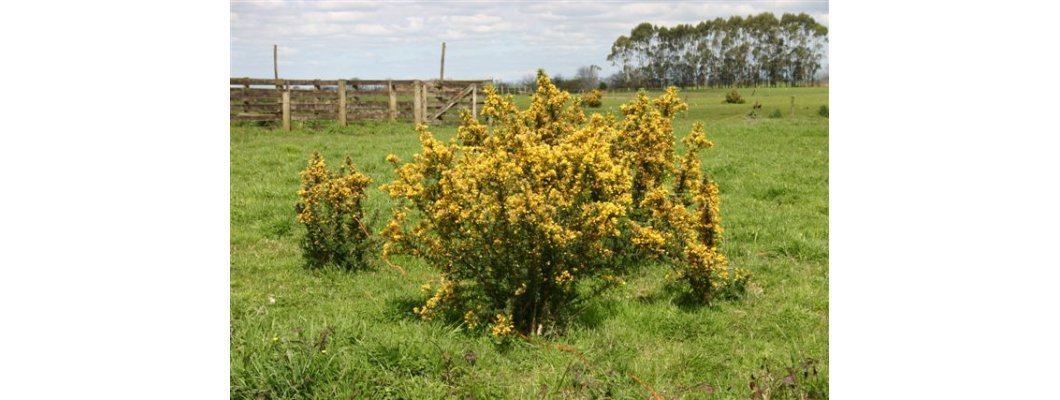
If it kills clovers does that mean it also kills gorse and other legumes? I want to control gorse growing under and around 4 year old alder and poplar trees. I have been cutting the gorse and using MS600 Metsulfuron to spray the stumps, but don't??? want to go too close to the trees with that as I think it could damage the trees by being taken up by the tree roots?
Another option may be to use glyphosate but perhaps GA200 to spray the stumps would be better? - what rate do you reckon?
Answer:
GA200 is fairly close to glyphosate in its kill spectrum with the exception that it is also effective against clover. That does mean that it will also be effective against other legumes, as you have suggested. Exactly how effective I can’t say for sure, because clover (in orchards etc) is normally the only legume that it’s used against. But I’d be very surprised if it did not kill any legume that you care to name.
It does kill gorse, when used at a fairly high rate (7.5-10L/hectare). It’s not as effective as metsulfuron-methyl (MSF600) against really big gorse, and of course at that rate is way more expensive than MSF600 as well. But it is safer to use around valuable trees and vines. It’s a contact herbicide, so translocation by soil route to roots is normally not a concern; you can spray closer the base of trees and vines than is wise with MSF600.
GA200 differs from glyphosate as a contact herbicide in one important and useful aspect: with glyphosate some contact with even just part of a plant will be enough to kill it, whereas with GA200 you really do need pretty extensive contact to kill the plant. The practical advantage that gives us is that a bit of unintended GA200 overspray contact onto a non-target plant is usually tolerated pretty well.
I don’t think spraying stumps with GA200 would be effective enough. It’s a foliar contact spray. It might work as a stump spray; I doubt it’s ever been tried, certainly not properly tried for registration purposes by anyone.
There is another option for safe spraying close to ornamental and plantation tree species, and that’s clopyralid (clopyralid 300g/L). It’s very effective on gorse and other brushweeds, and safe sprayed right around the bases of established trees. But the downside is it requires an Approved Handler certificate to purchase and apply, so that’s perhaps an extra complication.

Leave a Comment