
This Blog section is for news about Rainbow & Brown products and their application but especially new products.
05 Jul

0
8436
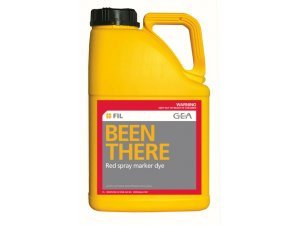
Most of you would be aware of these top Dye Spray Markers that have been market leaders in spray marker. Now Rainbow & Brown are pleased to be able to offer these at competitive prices.We always struggled to get a suitable spray marker that we could safely deliver to you on the farm. The rural posties, quite rightly, didn’t want to be carrying flam..
04 Jul

0
6735
Due to a number of requests from customers we have extended the special organosilicone wetting agent prices we had running for Fieldays until 4:30pm on Friday 12th July 2019
Check out the prices and info below and http://www.rainbowbrown.co.nz/penetrants
Rainbow & Brown have a great range of wetting agents and penetrants to aid the performance of..
02 Mar
0
7268
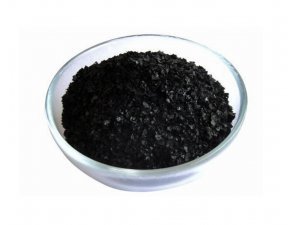
Seaweed Extract Powder This new product was a low-key launch in October 2016. We didn’t make much of a song-and-dance about it, but we knew there were already quite a few fans among our customers for seaweed extract based soil conditioners. And so it has proven:it’s been selling well and getting excellent reviews from users.Seaweed extract is sui..
02 Mar
0
7829
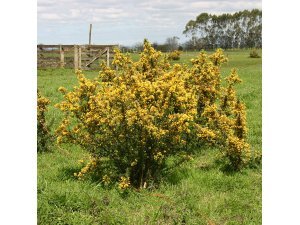
MSF600 (metsulfuron-methyl) is NZ’s favourite and most proven chemical for controlling gorse, especially heaps of big gorse.It has a couple of quirks that are the key to understanding why it works like it does.MSF600 suppresses production in the plant of an enzyme called acetolactate synthase (ALS). That enzyme is required to support new growth, bo..
02 Mar
0
6958
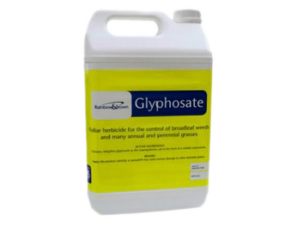
This is just a heads-up. Glyphosate prices will rise, probably fairly sharply, during this calendar year. Not just our brands; everybody’s brands. And it’ll likely be soon.Almost all the world’s glyphosate acid (that’s the technical concentrate used to make usable various forms of glyphosate herbicides) is made in China. And the producers there are..
12 Nov
0
23322
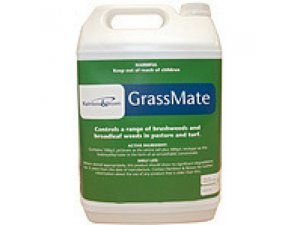
In answer to a question about Grassmate from a customer about control of broadleaf weeds in lawns,
Our product GrassMate is an excellent product for removing all broadleaf species, including clovers etc, from a lawn without damage to the grass.
For your situation a rate equivalent to 2L/Ha is about right. So for a 1.5 acre lawn, that's a total o..
06 Oct
0
11786
In response to a question from a farm adviser about a customer who'd sprayed for plantain control, and now wanted to drill new seed.Broad leaf plantain is normally taken out successfully at the normal rates at which glyphosate is used to spray out paddocks for cropping or for new pasture.That is between 3L/Ha and 5L/Ha when using G360 liquid, or th..
26 Oct


0
646
Every NZ farm that uses hazardous substances needs an up-to-date chemical inventory and a current safety data sheet (SDS) for each product, kept where workers and emergency services can get to them. When WorkSafe checked 680 sheep, beef and dairy farms in late 2025, missing SDSs and inventories were behind 94% of the improvement notices issued. B..
08 Oct

0
2131
A wetter helps spray droplets spread across a leaf and stay there, instead of beading up and rolling off before the herbicide gets in. Use a non-ionic wetter for everyday spraying, and step up to an organosilicone wetter for waxy, hairy, dusty or stressed weeds. Always check the herbicide label first, because it tells you whether a wetter is need..
30 Sep

0
3420
Spring is the only time of year a wasp queen is on her own. She's out of hibernation, building a small nest by herself and feeding her first larvae with no workers to back her up. Catch her now and that nest never forms, which means no colony of thousands and no new queens next autumn.
✓Queens are active from early spring, roughly September to..