Wild Radish
Raphanus raphanistrum
Download the PDF

DESCRIPTION
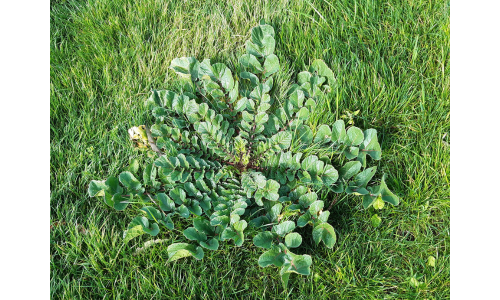
Wild Radish is a well-known invasive weed in New Zealand, native to Europe, Asia and North Africa. Annual or biennial, Wild Radish thrives in agricultural and pastoral systems due to its ability to adapt to disturbed soils. It is often confused with Wild Turnip, as both plants share similar characteristics, particularly in their early growth stages. Wild Radish starts as a rosette of hairy, heavily lobed leaves. However, as the plant matures, it undergoes stem elongation, forming an upright flower stem that can reach about 1 metre in height. The stems and leaves of Wild Radish remain bristly and hairy, distinguishing it from Wild Turnip, which has smooth leaves.
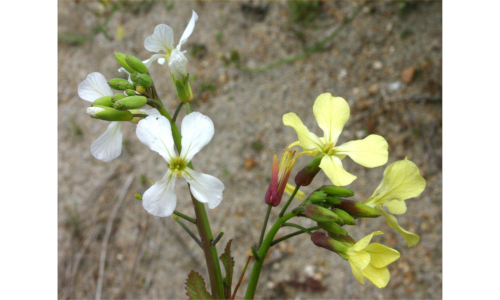
The flowers vary in colour, typically pale yellow to white, with four petals and distinct purplish veins—unlike Wild Turnip, which has brighter yellow petals without veins. Wild Radish typically flowers Oct-April; it produces large seed pods that constrict around each seed as they mature, breaking into sections upon falling, which aids in spreading. This weed is most problematic in spring and autumn when its rapid growth outcompetes crops and pastures.
HABITAT
Wild radish is highly adaptable and thrives in a variety of environments across New Zealand. It prefers well-drained soils but is resilient enough to establish in poorer, less fertile ground. It commonly invades cultivated fields, pastures, and areas of soil disturbance, such as roadsides, waste grounds, and coastal regions.
DISTRIBUTION
Common through North Island except Taranaki. Common in Nelson, Canterbury and Southland.
MANUAL REMOVAL
Manual removal of Wild Radish can be effective for smaller infestations, ideally before they flower and set seed. Care must be taken to remove the entire taproot to prevent regrowth.
HERBICIDE CONTROL
Herbicide control is a key strategy in managing wild radish infestations. They work best when applied at the seedling stage before the plant matures.
SPRAY APPLICATION
Non-Selective Herbicides
- Glyphosate 360 at 1L/100L for general weed spraying, or 3-5 L/ha for pasture spraying.
- Glyphosate 540 at 660ml/100L for general weed spraying, or 2-3.5L/ha for pasture spraying.
- Granny (soluble granular glyphosate) at 65g/15L knapsack, 425g/100L for general weed spraying, or 1.4-2.2kg/ ha for pasture spraying.
- TerbGuard 500 at a rate of 15 19L/ha in 150-300L water can be added to glyphosate if not being used on pasture or croplands.
- MPCA750 - 1.5L/ha in 200-300L water.
Selective Herbicides
- WHACK – 2,4-D 800 at 1.5kg – 2.5kg/ha. Ensure area is grazed 1 week prior to spraying to expose weeds and reduce clover leaf.
Ensure thoroughly wet.
- Decision at 30g/ha applied before the 4th leaf. Apply with BioWet crop oil. Minimum 500L spray mix per hectare.
- Ralid at
- 2L/ha by boom spray, or
- 200ml/100L by handgun, or
- 50ml/10L by knapsack sprayer.