RAGWORT
Ragwort – Senecio jacobaea or Jacobaea vulgaris
Includes Madagascar ragwort – Senecio madagascariensis
Download the PDF

DESCRIPTION
Ragwort is normally a biennial plant that germinates in autumn, grows as a rosette in its first year, then flowers, seed and dies between one and two years after germination. Plants that are mown, slashed or ineffectively sprayed often survive and develop into multi-crowned perennials, which are significantly harder to control.
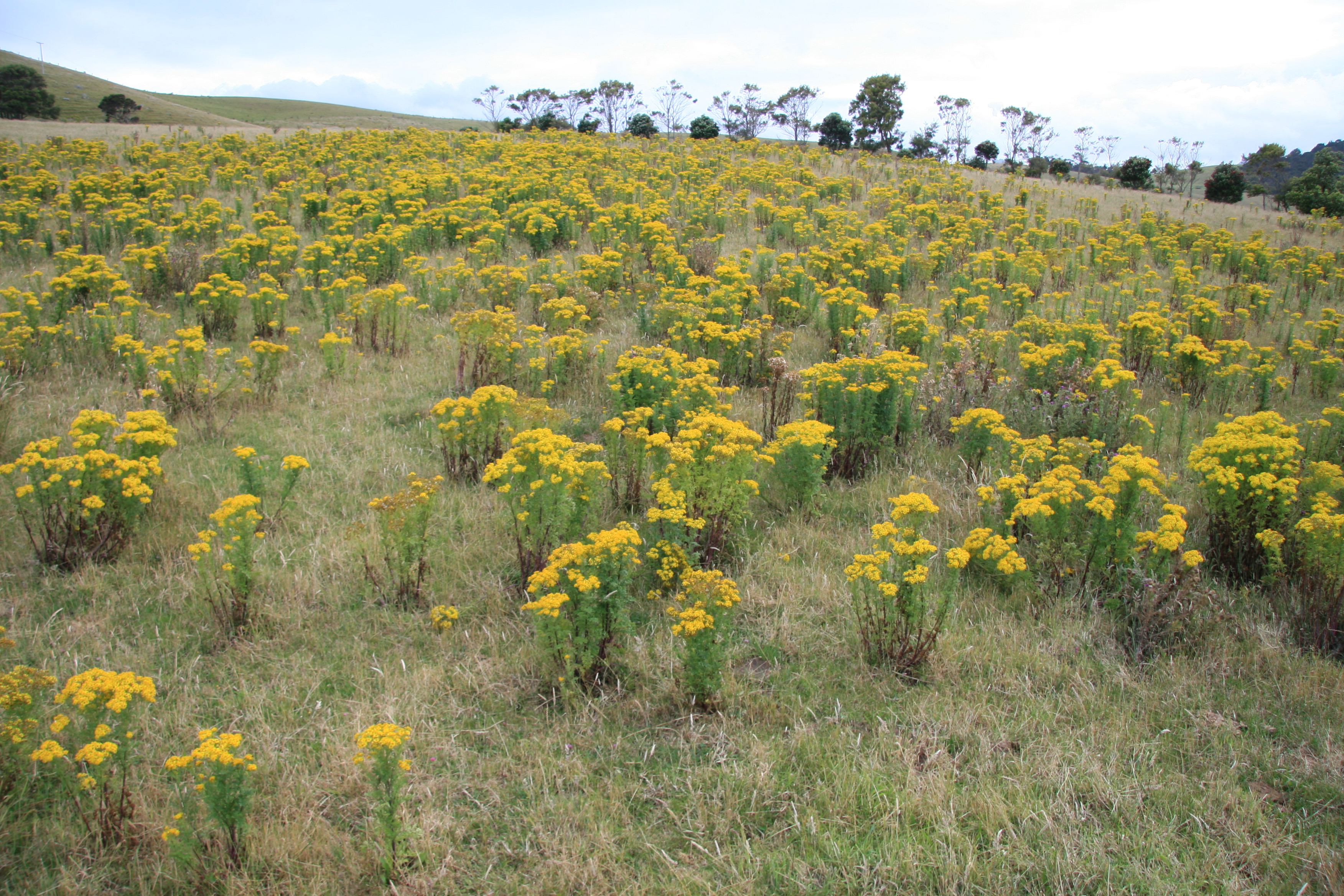
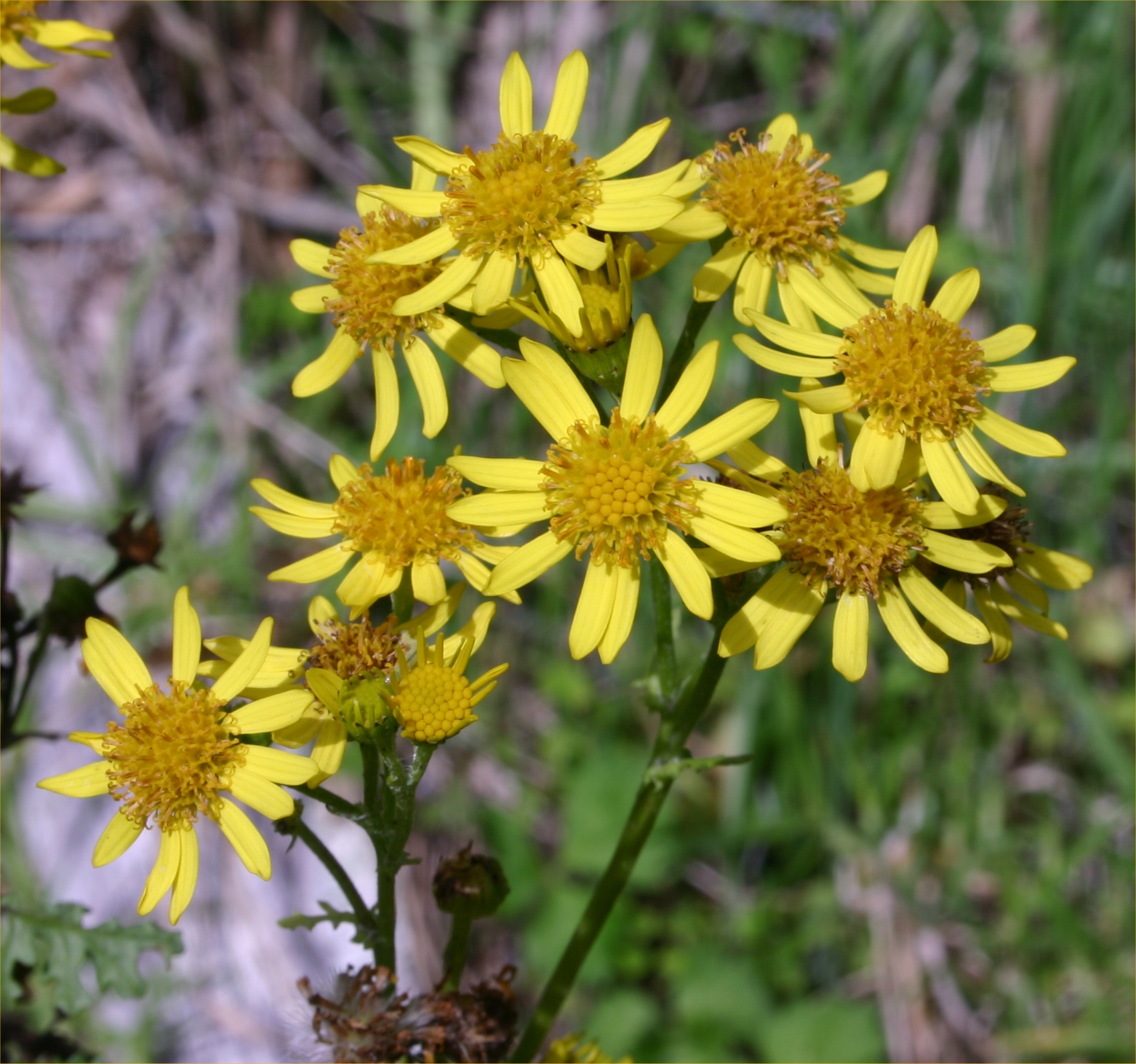
First-year plants form a low rosette of deeply lobed, tattered leaves. Flowering plants produce upright stems topped with bright yellow daisy-like flowers, typically standing 50-120cm tall and highly visible from a distance.
Ragwort prefers well-drained, fertile soils and thrives where pasture is weak or open. It spreads by seed, with a single plant capable of producing more than 200,000 seeds. Seesd can remain viable in the soil for more than 10 years, making prevention of seed set critical.
Ragwort contains toxic pyrrolizidine alkaloids that cause cumulative liver damage in livestock.
Habitat
Ragwort is is widespread throughout New Zealand and is commonly found in:
- Dairy, sheep and beef pasture where pasture cover is thin
- Horse paddocks and lifestyle blocks
- Gateways, tracks and pugged areas
- Neglected paddocks, raod verges and waste areas
It establishes most readily during autumn and winter where grass and clover competition is reduced. Many regional councils require landowners to control ragwort – refer to your local Pest Management Plan.
LIVESTOCK RISK
Ragwort is especially dangerous to horses. Consumption of as little as 7% of body weight can be fatal, with cumulative toxicity causing severe illness before symptoms appear.
Cattle generally avoid grazing ragwort, but infestationsreduces pasture utilisation. Sheep and goats will often eat ragwort without obvious short-term effects, though impacts on performance remain uncertain.
As ragwort dies it becomes more palatable but remains equally toxic:
- Exclude stock for 2 – 3 weeks after spraying
- Never include ragwort in silage or hay
Manual removal
Manual removal has limited effectiveness. Pulling or grubbing is ineffective up to early flowering, as root fragments readily re-grow. From late flowering onward, removal can be useful for isolated plants. All removed flower heads must be destroyed to prevent seed spread. Mowing or slashing is not recommended, as plants re-grow as multi-crown perennials.
BIOCONTROL
Approved biocontrol agents include:
- Ragwort flea beetle (Longitarsus jacobaeae)
- Ragwort crown-boring moth (Cochylis atricapitana)
- Cinnabar moth (Tyria jacobaeae)
Biocontrol provides long-term suppression only and should be integrated with other control methods. Some councils supply agents free of charge.
HERBICIDE CONTROL
Effective control generally requires a two-stage approach:
- Spot treatment of larger and multi-crown plants in autumn
- Boom spraying of seedlings and rosettes in winter.
Follow-up spot treatment of survivors may be required the following spring.
BOOM SPRAYING – PASTURE
Selective options for pasture:
- WHACK 2,4-D 800 - 2 kg/ha on seedlings and small rosettes (May–July) or 3 kg/ha on larger rosettes. Does not control mature or multi-crown ragwort. Clover damage usually minimal due to low winter clover presence.
- Rainbow & Brown MCPA750 - 3 L/ha on seedlings and small rosettes (May–July). More aggressive on clover than 2,4-D.
Enhancement:
- Adding Dicamba 500 Select improves control (but will damage clover) at the following rates:
- 120–140 ml/ha with WHACK 2,4-D 800, or
- 100 ml/ha with Rainbow & Brown MCPA750
SPOT SPRAYING – PASTURE
- GrassMate - 6 ml/L (grass-safe, but will damage clover)
- MSF600 - 2.5 g/100 L (rosettes) or 5 g/100 L (multi-crown plants). Not grass-safe; very cost effective where grass damage is acceptable.
- GrassMate XTRA - 6ml/L by knapsack (Rosette and multi-crowned plants)
LAWNS, TURF & NON-PASTORAL AREAS
(Not for use on grazed pasture)
- LawnMate - 75 – 100ml/10L per 250m2. Effective on seedling, rosette and actively growing ragwort plants. Suitable for lawns, turf, boundaries and non-grazed areas. Will damage or remove clover and other broadleaf species.
WEED WIPER
- MSF600 – approximately 2 g/5 L. Apply once plants stand above pasture height. Hard graze first; double pass for best results.
DRY SPOT TREATMENT
- Buckshot - Apply 2 g (½ level teaspoon) to crushed plant centre.