
Fennel
Foeniculum vulgarae

DESCRIPTION
Fennel is a quite tall plant, growing up to 2 metres. It’s not often a problem on developed agricultural land, but is very commonly seen on roadsides and in waste areas, including vacant sections.
It produces large clusters of bright yellow flowers through the summer and autumn. The flowers themselves are individually very small, but as they grow at the tops of the stems in prominent umbels (umbrella-like clusters), the flowering plant is visually spectacular, especially when growing in thick clumps.
The other telling recognition feature is the distinctly aniseed smell of the leaves, which are often used as a cooking or garnishing herb with fish recipes, and in several other cooking and baking applications. This is a bit of a surprise, because fennel was for a time classified as a noxious plant due to its similarity to the poisonous hemlock. It is, however, not poisonous, and remains a welcome visitor to many a kitchen and dining table.
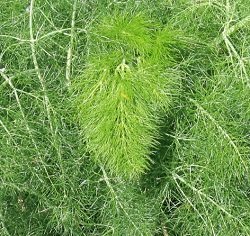
Fennel is a perennial plant, growing from a woody and bulbous root system. It produces many erect, shiny, ribbed stems covered with finely divided feathery leaves. The leaves die back in the winter months.
It also produces fruit in the form of small oval capsules, about 4-5mm long, and dark brown in colour.
HABITAT
The NZ distribution of fennel is extensive. It’s found through the entire North Island, and most of the South Island (except for the southern and south-western parts). The plant originated from Europe.
Because it is not normally a problem on developed or actively-used agricultural land, but rather inhabits the unused places, fennel is more of a cosmetic concern than a serious threat to farm production. However, it does tend to multiply if left unchecked, and soon dominates the site. For that reason, in many locations it remains a species you’ll want to eradicate.
MANUAL CONTROL
Individual plants can be grubbed out successfully. Make sure you remove the root system as well, and it’s best to then remove all plant material off the site.
HERBICIDES TO CONTROL FENNEL
Fennel is quite susceptible to common herbicides, and can be sprayed any time that it’s actively growing. The ideal time will be spring and summer.
Spot Spray Herbicides to Kill Fennel
All situations where spraying is required will be hand spraying jobs, whether the fennel is present in isolated clumps or large patches of growth.
Several herbicides are effective, and the choice comes down to considering what other plants (if any) that you will be catching in your spray, as well as to which herbicides you have on hand at the time.
Where you want to totally spray out the affected site, and grass damage from overspray is not a concern, glyphosate is the best option:
- Granny Herbicide – 45g/10L water.
- G-360 GLYPHOSATE – 100ml/10L water or G-540 GLYPHOSATE – 70ml/10L water.
Where you want to kill just the fennel (and other susceptible weeds) but leave the grass:
- GrassMate – 60ml/10L water.
- Dicamba 500 Select – 15ml plus 40ml Rainbow & Brown MCPA750 in 15L water.
- Dicamba 500 Select – 20ml plus 81ml WHACK – 2,4-D 800 per 15L water.
- GrassMate XTRA – 6ml/L by knapsack – Apply during active growth from full leaf to early flowering
Where you want to kill the fennel (and other weeds) but leave both grass and clover (although the clover will be severely suppressed:
- TRICLO Heribcide – 60ml/10L water.
In all cases when spraying, for best results add SprayWetter penetrant at 10ml/10L water to ensure thorough penetration of the herbicide into the plant.
